Winter holidays! Bring on the snow, sun and skiing! But hold on… Before we cruise the piste we need to cruise the route. And unless you are arriving by helicopter or private plane, you’re going to travel by road. Whether you drive from home, from the airport by hire car or are driven in a private airport transfer, it’s helpful to know the conditions.
At Mountain Rescue Ski Resort Transfers we have snow-shovels of experience gleaned from years of winter driving. Unfortunately, we cannot predict the exact conditions you’ll face, but we can make an educated guess as to what you MAY face. So please read on for our take on what you may encounter on your drive up into the French Alps. Particularly the Tarentaise valley and access to the major resorts: The Three Valleys, La Plagne, Les Arcs, Val d’Isere and Tignes.
Firstly, the majority of journeys are smooth. Maybe a little heavy traffic at peak periods or ice and snow up high, but nothing that a capable, prepared driver can’t handle. But just like that sudden white-out when you’re skiing, or larger-than-expected snowfall, things can, and do, change quickly.
Traffic conditions
School holidays, Christmas and New Year bring the traffic. French holiday makers love to ski and flood in over the weekends of the festive period and in the February and March holiday periods. French school holidays are stuttered by geographical department, meaning there can be busy periods for extended weeks.
If you are hiring a vehicle at the the airport it is worth being mindful of delays. Geneva airport can be deluged by rush hour traffic heading to the border. Lyon, Grenoble and Chambéry don’t suffer from the same inner-city problem, but if your heading to any of the resorts mentioned above you may hit traffic as you enter the mountains.
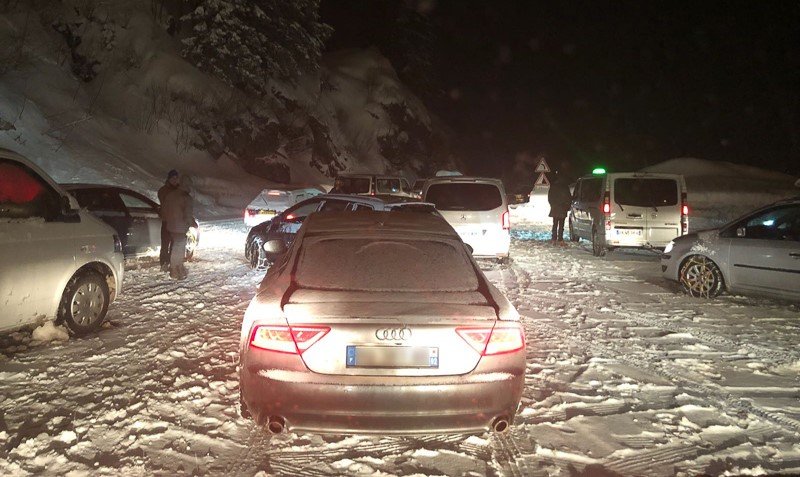
As traffic enters the Tarentaise valley it is naturally bottlenecked by the landscape and smaller road system. Traffic can be under tight control by a traffic management system, which employs traffic lights and junction closures – to stop congestion spreading to nearby villages – on the major N90 artery. Unfortunately, there is little escape from this without local number plates and local knowledge. Fortunately, the majority of this disruption is on peak Saturdays, so a simple plan to travel on an alternative day will greatly reduce the chances of disruption.
Our advice:
Preplan your route, the sat-nav may lead you astray into high passes or closed roads.
Check French holiday dates to predict traffic conditions.
Be prepared for rush hour if departing Geneva in the week between 17h and 19h.
Road conditions
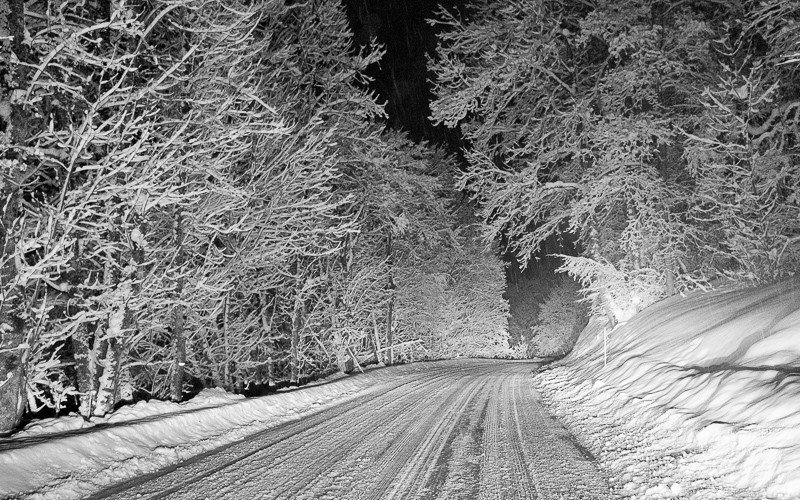
It is not uncommon to have snowfall on the motorways and lower roads in mid-winter. Ploughs are a common sight. Do be aware of other drivers, it can be surprising the speed at which some drive in the snow, their patience worn down by delays, or their confidence high from experience, or both.

Val d’Isere has a white-roads policy. You will encounter snow in the village. The centre is flat but it’s worth checking the approach to your chalet or hotel as some have a steep approach. Mountain Rescue drivers often have to put snow-chains to get to the door of particular establishments.
Val Thorens, St Martin de Belleville and Les Menuires, have a long and winding approach (40km to VT), which is often snow covered. Val Thorens has snow on the roads all season.
Les Arcs split into Arc1600, Arc1800, Arc1950 and Arc2000 are accessed by a main road which winds its way to 2000m from Bourg-Saint-Maurice (800m). As with all resort roads it is well ploughed and gritted but can be icy the higher you climb. Do be cautious as black ice can be prevalent toward Arc1950 and 2000 on this route.
Keep an eye out for illuminated signs that will suggest or obligate you to put on snow-chains. There are also specific areas where you can do this marked, ‘Aire De Chainage’.
Finally, don’t be surprised to encounter heavy fog. But as quick as it arrives it can disperse. As with all driving, patience is a virtue.
Our advice:
Practice and pack snow-chains.
Keep rested, don’t try and drive too far in one go.
Follow the advice of the signs, and your common sense, put chains on at a safe place when in snow.
Know your destination. Is it a tricky approach to the chalet/hotel?
As already mentioned, most journeys are nuisance free, but combinations of the above factors do arise to make things challenging. Without fail tricky conditions arise every season but researching the weather and planning your travel will go along way to making sure your French ski holiday gets off to an awesome, hassle free start. Bonne Route!
We have heaps more useful advice on our website here. We also offer quotes for airport transfers here.www.themountainrescue.com